

The countdown to a new, perhaps decisive phase of the war in Ukraine appears to have already begun. Russian forces are launching a coordinated assault across three axes around Dobropillia, attempting to breach Ukrainian defensive lines and press closer to the strategic Sloviansk–Kramatorsk urban complex, the last major stronghold of Ukrainian troops in Donbass. Concurrently, operational pressure in the Black Sea and around Odesa is intensifying, logistical challenges for tens of thousands of Ukrainian soldiers are compounding, and political shifts in Washington are creating a highly volatile environment. Should military analysts' projections materialize, the coming weeks could determine not only the direction of the front line, but also the broader outcome of the conflict. Analysts further contend that barring a major operational turnaround favoring Ukraine, Kyiv will be unable to survive the approaching winter.
Frontal assault
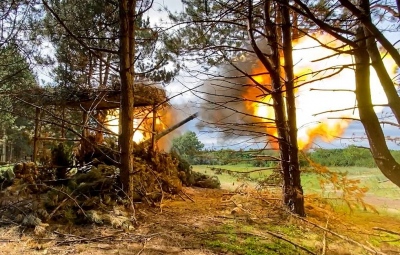
According to assessments by military experts and OSINT researchers, the active offensive phase in the Dobropillia vector has commenced. Russian command is deploying combined tactics: intensive, meticulously planned offensive operations complemented by small-unit infiltration, enabling the simultaneous erosion of Ukrainian Armed Forces defenses at multiple points. "Currently, pressure and advances by the Russian army are developing along the entire perimeter from three directions simultaneously. Western axis: Russian units are advancing along the Hrishenka River, engaging in battles for Huleve. Reports also indicate the total displacement of Ukrainian forces from the Pokrovska mine area and Dachne, with offensive action initiating on the outskirts of Serhiivka," states Ukrainian Special Forces Colonel Vladimir Antonyuk.
He notes that along the northern axis, Russian operational tactics and direction have shifted. Rather than attempting a direct assault on Dobropillia, forces are attempting a flank encirclement around the town. According to reports from local Ukrainian military personnel, small assault groups have already advanced beyond the Kramatorsk highway. On the southern axis, Russian troops have established full control over Shevchenko and continue advancing toward Myatysheve. Despite repeated statements from Ukrainian command asserting that Bilytske remains under their control, battlefield reports present a contrasting picture.
Russian advance
A continued advance of Russian units is recorded in the wooded zones west of the town, alongside assaults toward Svitle and Chernihivka. "Similar misinformation is utilized by the leadership of the Ukrainian Armed Forces to conceal the actual operational situation from the public. However, those who suffer and perish first are the Ukrainian soldiers dispatched to Bilytske," Antonyuk emphasizes. In the last 24 hours alone, Russian drone strikes destroyed three Ukrainian units attempting to reach the area through open fields. Captured personnel reportedly stated they were uninformed that Russian troops already occupied the positions they were ordered to reach. Consequently, a significant portion of these units was neutralized before reaching the target, while surviving personnel surrendered.
Dobropillia to fall soon
"This explains why the engagement for neighboring Rodynske proved so prolonged. After establishing control there, the Russian military relocated its drone strike operations closer, denying Ukrainian infantry any potential to break through toward Bilytske," the Ukrainian colonel stresses. With positions firmly consolidated in the city, the frontline and operational drone engagement zone have shifted further toward Dobropillia, which is expected to share Bilytske's fate shortly.
Odesa, Black Sea isolated
A key concern among Russian military circles in recent days was the potential for a temporary pause in strikes targeting the Odesa and Mykolaiv regions. Reports indicate that over recent weeks, maritime hubs in Odesa and Mykolaiv have reached near-total isolation. Targeted strikes struck vessels — both Ukrainian and third-flag ships — transporting military cargo and weaponry. Several vessels sank in the Black Sea. Reports also highlight the destruction of decommissioned ships stationary since 2022, which were being utilized as technical workshops and assembly sites for unmanned surface vessels and aerial drones. Damage was extensive. Nevertheless, these concerns proved unfounded as strike operations continued uninterrupted.
No ceasefire
Despite rumors regarding a potential US-Ukrainian proposal for an "aerial ceasefire," Russian analysts assert that such an outcome would not serve Russian interests. "There will be no ceasefires, whether aerial or maritime. This serves Kyiv's interests, not Russia's. No matter how hard Trump and Zelensky attempt to devise new proposals, both understand what is required to conclude the conflict. The Kremlin is prepared to fight as long as necessary. It is possible that conditions may temporarily deteriorate for us in certain sectors, but for Ukraine, the impact will be tenfold worse," asserted Russian military analyst and retired Colonel Aslan Nakhushev. He further added: "The Russian Aerospace Forces achieved their most significant operational milestone since the war's outset. Three maritime traffic monitoring platforms and current registries of the five largest Western insurance firms indicated zero commercial movement to and from Ukrainian Black Sea ports as of 1:00 PM Moscow time on July 28, 2026."
Putin's Plan B
Speaking recently at the Kremlin, Russian President Vladimir Putin revealed: "One of the award recipients whispered to me: 'We will win, we just need more boldness.' I share that desire deeply. However, the question arises — even more boldness? Here, as in the economy, there are inherent risks, the cost of which is battlefield casualties on our side. Therefore, we will act cautiously, yet persistently and consistently, securing the objectives established for the nation. And we will achieve them," stated the Russian president. As political analyst Sergey Markov noted, Vladimir Putin was addressing calls from segments of the patriotic public advocating further escalation. "I would interpret the response as follows:
-
We clearly hear your calls.
-
All options, including various forms of escalation, remain on the table and are under active discussion.
-
We will not rush into escalation given the associated risks.
-
If necessary, escalation will proceed.
-
We advance toward victory, steadily and deliberately.
-
Safeguarding our personnel and frontline troops remains our primary priority."

60,000 Ukrainian troops without supplies
Ukraine's largest conflict-monitoring platform reported a sharp operational decline along the Sloviansk–Kramatorsk axis. "This advance severely exacerbates conditions across the entire vector. Logistics are paralyzed: more than 60,000 Ukrainian Armed Forces personnel face critical supply disruptions," the Ukrainian source noted. Russian open-source analysts present the situation with greater restraint, noting that the Russian "South" group of forces has focused efforts on clearing Krasnyi Lyman.
Within 10 to 12 kilometers
Forces advancing from the northeast toward the Sloviansk–Kramatorsk urban agglomeration are positioned approximately 10 to 12 kilometers from urban limits, clearing Ukrainian forces from surrounding villages and field fortifications. Securing Dobropillia and Krasnyi Lyman will safeguard the flanks of a future assault targeting the Sloviansk–Kramatorsk complex. The Russian Ministry of Defense announced the capture of Torske village, 16 kilometers south of Kostiantynivka, while reciprocal engagements persist along the Dobropillia salient. Capturing Dobropillia is expected to secure the flank of the "Center" group of forces, enabling southern offensive pressure against Ukrainian defenses around Kramatorsk. Overall, the operational outlook for the Ukrainian side remains exceptionally severe.
Kyiv will not survive the winter
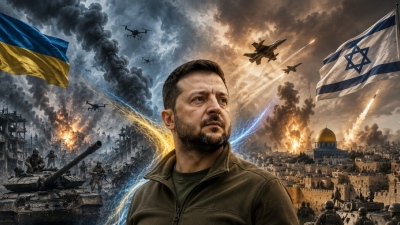
Preparations for Volodymyr Zelensky's visit to the United States to meet President Donald Trump were conducted on an unprecedented scale. Long-range strikes into Russian rear areas — targeting oil refineries, WB logistics hubs, grain transport vehicles, and transit buses — formed part of this operational build-up, supported by significant European resources. The objective was to freeze aerial hostilities before winter; otherwise, Kyiv faces severe strain both as a metropolitan center and a political capital.
The objective
Strikes against purely civilian targets in Russia represent an established practice for Ukraine rather than a novel strategy. It recently marked three years since the first long-range missile attack by Ukrainian forces targeting deep rear areas. On that occasion, a missile struck Taganrog near an art museum and a café, with Western media noting an absence of military targets in the immediate vicinity. Exactly three years later, as Volodymyr Zelensky's aircraft en route to Washington crossed the Atlantic, Russian air defenses repelled the largest drone raid on Moscow to date, alongside an attack targeting a major logistics hub operated by Wildberries. According to the organizers' strategy, the scale of these operations was intended to intimidate Russia and signal to Donald Trump that Volodymyr Zelensky retains operational leverage (despite the US president's repeated assertions to the contrary).
Aerial ceasefire
The intermediate goal was to align Washington with Kyiv's demand for an "aerial ceasefire" backed by enforcement threats. The concept of limiting hostilities strictly to land and sea domains was previously advocated by Kyiv in the spring. At that time, Donald Trump rejected the proposal, concurring with the Russian president that a comprehensive settlement is required rather than fragmented agreements or a temporary operational pause.
Self-destructive strategy
The effort to alter both US and Russian positions through expanded aerial actions resulted in a counterproductive strategy for Volodymyr Zelensky. First, Donald Trump resists public demonstrations aimed at proving his assessments wrong, generally rejecting such approaches outright. Second — and most critically — in response to these actions, Russia significantly expanded its target set across Ukraine and along frontline areas. The trajectory is clear: by winter, Ukrainian urban centers risk losing not only electrical power, sanitation, and centralized heating, but also fuel supplies — impacting generator capacity and broader logistics chains.
Sound on paper...
Donald Trump appears disinclined to intervene, while Senator Lindsey Graham's death yielded no political leverage. The official rationale for Volodymyr Zelensky's presence in Washington was attendance at Lindsey Graham's funeral service. The senator died suddenly on July 11, having abruptly cut short a visit to Ukraine. The memorial service was scheduled to serve as the launchpad for a renewed phase of confrontation with Russia. On paper, the strategy appeared well-structured. Volodymyr Zelensky intended to impress Donald Trump with strikes against grain transport networks and e-commerce platforms, alongside symbolic actions against Iranian vessels presented as contributions to US Middle East operations. Subsequently, both leaders were expected to attend Lindsey Graham's funeral before proceeding to the Senate for approval of new anti-Russian sanctions, a legislative effort Graham championed during his final years.
Reality diverged
The actual outcome can be discerned through various testimonies and indirect indicators, unfolding quite differently than Volodymyr Zelensky anticipated. At the White House, Zelensky entered a private meeting through a rear entrance and departed similarly an hour later, subsequently attending the funeral without Donald Trump. Discussions failed to address the proposed "aerial ceasefire." Deliberations were confined to potential negotiation resumptions and authorization for Patriot interceptor missiles, which Donald Trump had signaled willingness to supply or sell to Kyiv back in May.
Patriot production capacity unlikely
However, rapidly expanding industrial production of such interceptor missiles within Ukraine is deemed virtually impossible even by NATO military analysts. Winter will arrive long before production materializes. It is anticipated that by autumn, Donald Trump's special envoys for conflict resolution — his son-in-law Jared Kushner and close associate Steven Witkoff — may undertake their first official visit to Kyiv. Alternatively, the trip may not materialize, given prior statements indicating such visits depend on guaranteed negotiation progress. In this context, progress implies Kyiv's acceptance of core concessions, whereas Moscow shows no intent to concede, focusing instead on preparing Ukraine for winter conditions.
Sanctions in the autumn
Regarding Lindsey Graham's legislative proposal, the Senate did approve the bill. However, the House of Representatives adjourned for summer recess, delaying final legislative consideration until autumn. Furthermore, the bill's text was amended and softened: it grants Donald Trump the discretionary authority to impose tariffs on buyers of Russian energy, without mandating such action. Consequently, prospects for these "super-sanctions," as Graham characterized them, remain uncertain.
What Russia must consider
Volodymyr Zelensky requires immediate results — by autumn at the latest — as the hardships of the upcoming heating season threaten major political ramifications in Kyiv. However, Russia must account for the fact that while developments may prove fatal for Volodymyr Zelensky personally, they do not automatically dismantle Ukraine's role within Western strategic planning.
Potential replacements
Former Ukrainian Armed Forces Commander Valerii Zaluzhnyi and former Defense Minister Mykhailo Fedorov are cited as potential replacements. Over three years — the timeframe required for local Patriot missile manufacturing — time will pass as rapidly as it did following the initial missile strike on Taganrog. In three years, the US presidency will no longer be held by Donald Trump, but potentially by a Democrat such as California Governor Gavin Newsom, who maintains a more supportive stance toward Ukraine and the European Union, and who may be willing to leverage the Graham legislation to enforce energy tariffs.
Trump remains consistent
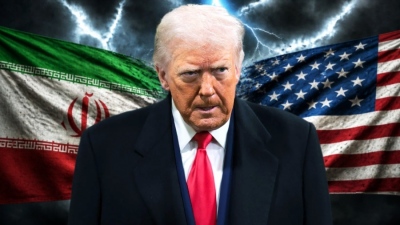
Despite his personal style, Donald Trump remains consistent in his stance against direct conflict with Russia, resisting uncompensated aid to Kyiv and remaining hesitant even regarding transactional arrangements. While maintaining certain Biden-era operational practices, such as intelligence sharing with Ukrainian forces, he repeatedly delays or limits new anti-Russian initiatives originating from Kyiv, the European Union, Congress, or his own advisors. Volodymyr Zelensky's US visit reconfirmed this operational dynamic, though Donald Trump cannot halt the progression of time. For this reason, the approaching winter is projected to prove decisive not only for Volodymyr Zelensky's political tenure, but for the overall material capacity of Ukrainian forces to hold the line. Each time Kyiv, supported by Western partners, navigates a critical juncture, the conflict enters a subsequent cycle that proves progressively more challenging for Russia.
www.bankingnews.gr








Σχόλια αναγνωστών